


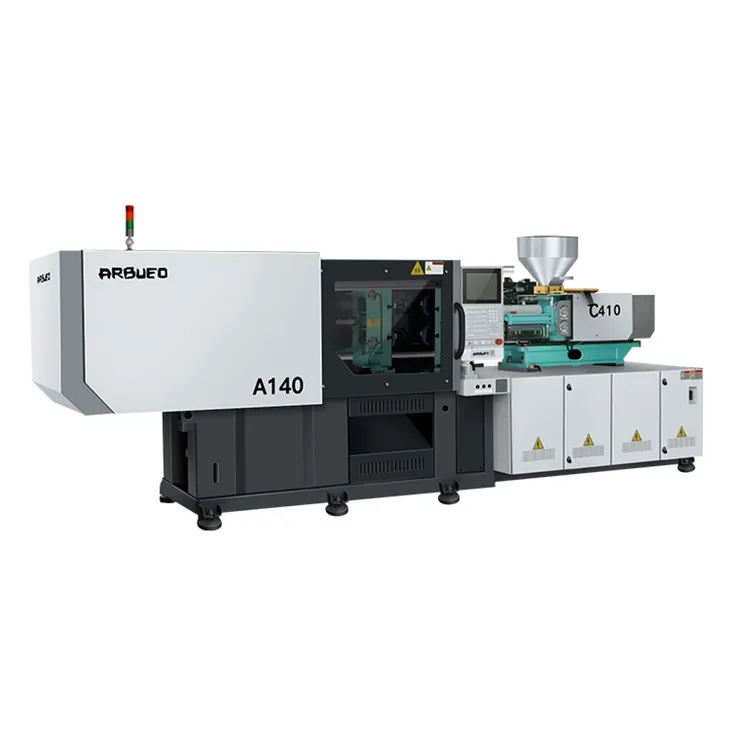


There are many different types of plastic injection molding machines available, each with unique features and capabilities. Some machines are better for high-volume production, while others are ideal for small runs and prototyping. The size of the machine can also vary depending on the size of the parts you produce.
|
A140/C410 |
||||
|
|
A |
B |
C |
|
|
38 |
42 |
45 |
||
|
L/D |
22 |
20 |
18.5 |
|
|
CM^3 |
205 |
251 |
286 |
|
|
g |
186 |
228 |
260 |
|
|
200 |
163 |
143 |
||
|
200 |
||||
|
|
|
|
||
|
1400 |
||||
|
390 |
||||
|
420x420 |
||||
|
460 |
||||
|
160 |
||||
|
120 |
||||
|
46 |
||||
|
|
|
|
||
|
140 |
||||
|
16 |
||||
|
11.75 |
||||
|
m |
4.7x1.3x1.8 |
|||
|
t |
4.9 |
|||
|
25 |
||||
|
L |
165 |
|||
Acrylonitrile-Butadiene-Styrene (ABS)
Available in a range of types, different nylons offer various properties. Typically, nylons have good temperature and good chemical resistance and can absorb moisture. Read more about nylons in Nylon 6 vs Nylon 6/6.
A high-performance plastic, PC is lightweight, has high impact strength and stability, alongside some good electrical properties.
With good fatigue and heat resistance, PP is semi-rigid, translucent and tough. Find out more in our guide PP vs PE.
The clamping force is a pivotal factor that influences the quality of the molded parts. It's essential to calculate the tonnage needed to adequately support the mold during the injection process. This ensures the mold remains securely closed, preventing material leakage and ensuring the production of high-quality parts.
Before finalizing your machine purchase, it's crucial to ensure that the selected machine can accommodate your mold's specifications, including tie-bar spacing, platen size, and mold height. This compatibility check is necessary to avoid mold installation issues and guarantee smooth operation.
Machines that utilize power efficiently can significantly reduce operating costs. Assessing and comparing the energy consumption profiles of potential machines helps in identifying the most energy-efficient option.
Advanced control features that allow for precise manipulation of injection speed, pressure, and temperature are indispensable for producing superior-quality parts. Machines equipped with these controls can adapt to the specific needs of each project, enabling the production of parts with tight tolerances and superior finishes.
Ensure Reliable After-Sales Support: The value of robust after-sales support and maintenance services cannot be overstated. Reliable technical support and timely maintenance can drastically reduce downtime and prolong the lifespan of your injection molding machine.
Conduct a Cost-Benefit Analysis: Beyond the initial purchase price, understanding the total cost of ownership is essential. This includes considering ongoing maintenance expenses, energy costs, and potential production downtime. A thorough cost-benefit analysis provides a clearer picture of the machine's long-term financial implications, guiding a more informed purchase decision.
Etiquetes populars:


